Build What Matters
Hands-on robotics for ages 4 to 16 — from big-brick machines at four to autonomous builds at sixteen.
Six campuses in Singapore.
- Ages 4–16One Structured Pathway
- Est. 2022Singapore’s Leading STEAM Academy
- 10,000+Students Taught
- 10+Competitions Entered
More Than Just Machines
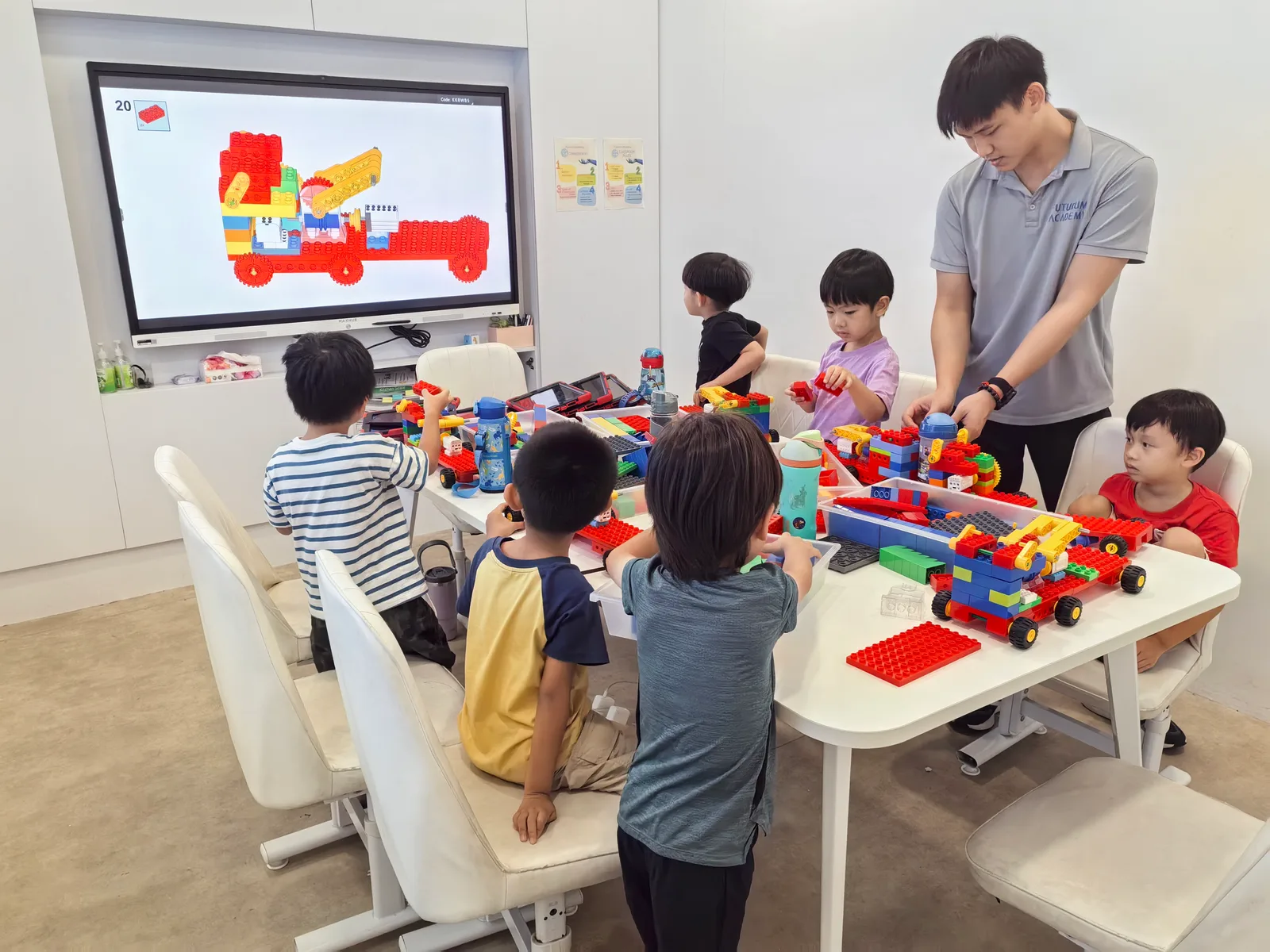
Hands-On Building
Structures, gears and mechanisms — understanding how real machines work by building them, from the very first class.
The Engineering Design Process
Define, design, build, test, improve: the professional engineering cycle, practised on every single project.
From First Mechanisms to Autonomous Systems
Age-appropriate build platforms that grow with the student — motors and gears at the start, sensors and autonomy later.
Autonomous Programming
Sensors, logic and code that let a robot make its own decisions — where robotics meets computer science.
Team Strategy
Robotics is a team sport: alliance strategy, match analysis, documentation and the engineering notebook.
Competition Season
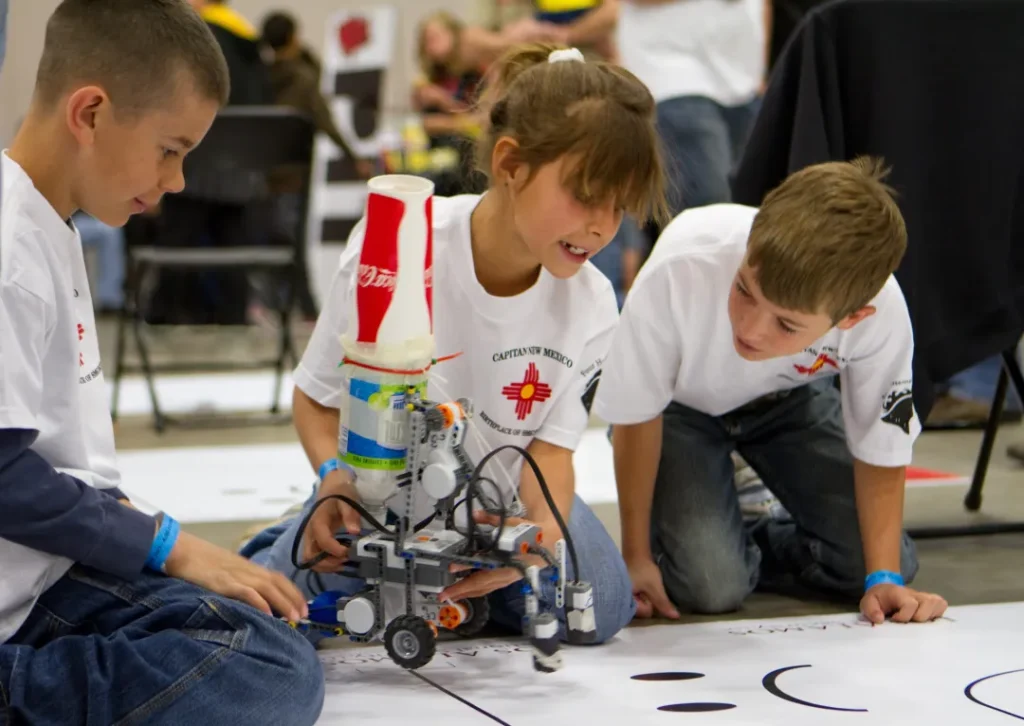
Structured pathways into national and international robotics tournaments for students ready to compete.
How a Competition Robot Comes Together
The professional engineering cycle, practised from the very first machine.
Define the Challenge
Read the game, study the constraints, agree what winning looks like — engineering starts with understanding the problem.
Design & Prototype
Sketches, CAD and quick mock-ups. Ideas are cheap to test on paper and expensive to test in metal — so we test them on paper first.
Build & Program
Structures, drivetrains, sensors and autonomous routines come together — mechanical and software teams working as one.
Test, Iterate, Compete
Run, measure, rebuild, run again. By the time the robot reaches an arena, it has already failed and improved a hundred times.
Ninety Minutes, Start to Finish
Mission Briefing
Today’s engineering challenge is set — a machine to design, a problem the build must solve.
Design & Build
Structures, gears and mechanisms take shape in pairs, following the engineering design process.
Test & Improve
The robot runs — and usually fails first. Measure, adjust, run again: iteration is the lesson.
Demo Day
Machines face the challenge in front of the class; builders explain what they changed and why.
A Structured Path at Every Age
One structured, level-by-level pathway — from first big-brick builds to advanced autonomous machines, each stage standing on the one before it.
Discoverers
Big-brick builds and playful challenges that turn curiosity into confidence with real moving machines.
Builders
Robotics foundations — mechanisms, first sensors, and the joy of a robot that does what you designed it to do.
Engineers
Full engineering design process, autonomous programming and the first taste of competitive robotics.
Competitors
Advanced builds, autonomous programming and tournament seasons — the track our competition teams grow from.
The fastest way to decide is to sit in on a real lesson — the first one is free.
Robotics Is the Skill of the Embodied-A.I. Era
The next decade of technology happens in the physical world — autonomous machines, smart factories, robots that see and move. The engineers of that world are in primary school today.
Robotics is where every STEAM discipline meets: mechanical design, electronics, code, mathematics and teamwork in one build. There is no better training ground for systems thinking.
And because the work is judged outside this building, the learning is honest: the robot either works in front of someone who has never met your child, or it doesn’t. That standard is what builds real engineers.
See Where Our Teams CompeteThree Kinds of Students
One Programme
Loves Building Things That Move
Starts with big-brick machines and playful challenges — motors and gears turn curiosity into confidence.
Wants a Team and a Season
Joins a squad, keeps an engineering notebook, and trains for national and international tournament seasons.
Engineering a School Application
Competition results and documented builds become a Direct School Admission portfolio panels can verify.
The DSA Journey“My son enjoyed building and programming the robot himself. It's wonderful to see him shift from being a game player to a creator. Thank you for the inspiring session!”
Common Questions
What age can my child start robotics?
From age 4. Our youngest Discoverers build with large-format kits, and the track runs continuously up to age 16.
What will my child build with?
Age-appropriate build platforms, scaled by level — larger-format kits for the youngest builders, then metal structures, motors and sensors as the engineering gets harder. The platform changes with the student, not the other way round.
Does robotics help with DSA applications?
Yes. Competition results, the engineering notebook and project documentation build exactly the kind of verified portfolio that Direct School Admission applications look for — see our DSA Journey programme for the structured pathway.
Can my child join a competition team?
Competition placement is by readiness rather than age. Students who complete the Engineers stage can trial for our tournament squads competing at national and international events.
How do I book a free trial class?
Book through the free trial page on this site, or WhatsApp us at +65 8039 8777 and we will arrange a session at your preferred campus.
Still deciding? Sit in on a free trial or find your nearest campus.
Come and See One Lesson
Experience a real class and get a personalised recommendation for your child. No pressure. No obligation.
“The teachers are professional and patient, my child is highly motivated in class, and has made significant progress.”